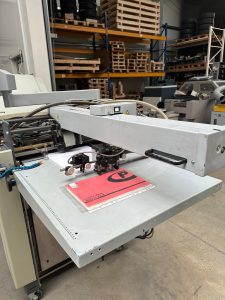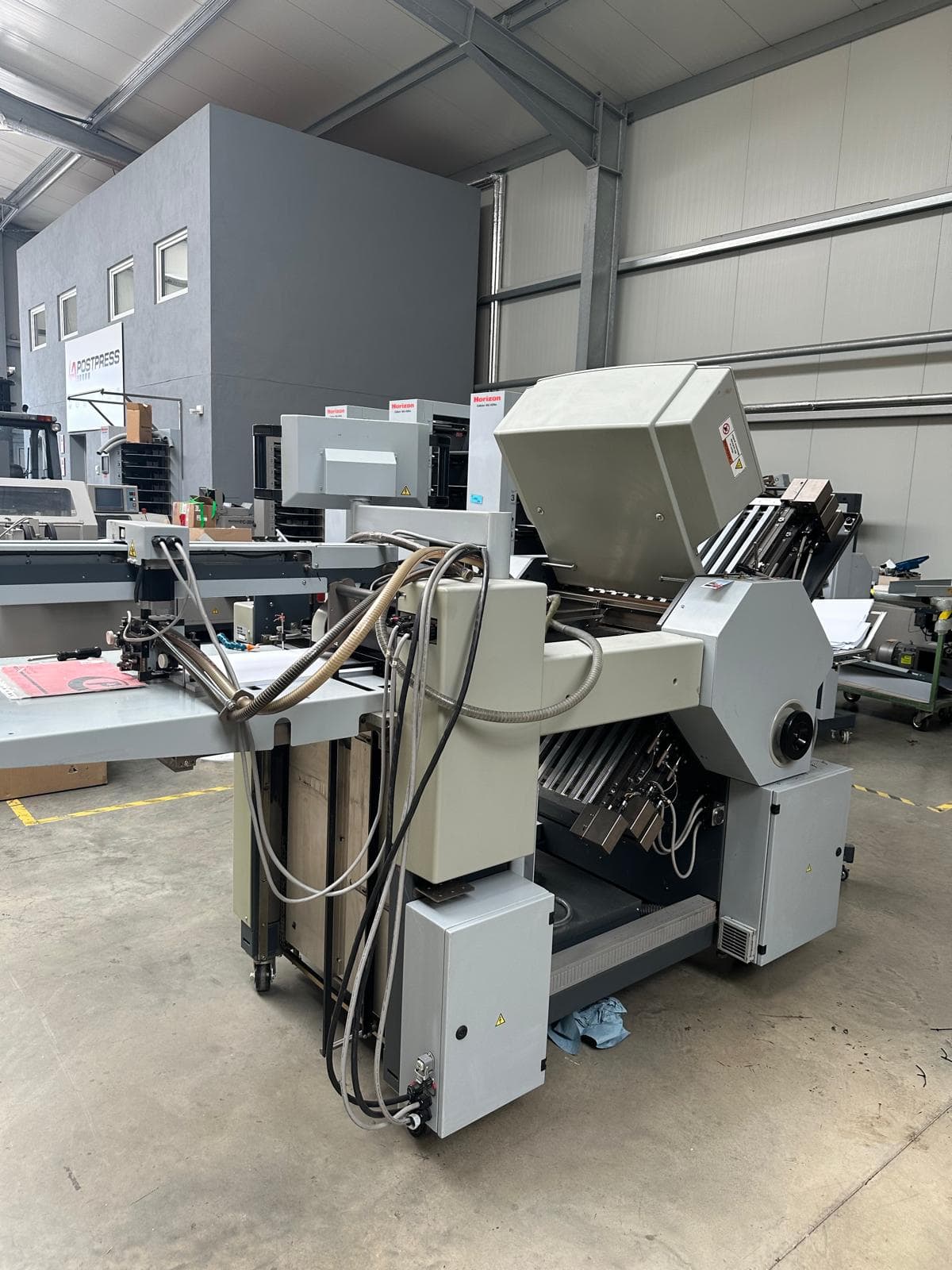
Wenn eine gebrauchte Falzmaschine in unserer Werkstatt ankommt, beginnt die eigentliche Arbeit.
Auf den ersten Blick mag alles in Ordnung aussehen.
Doch bei genauerer Betrachtung der Maschine tauchen oft typische Probleme auf.
Häufige Probleme mit gebrauchten Falzmaschinen
In vielen Fällen ist es nicht ein großes Problem, sondern mehrere kleinere.
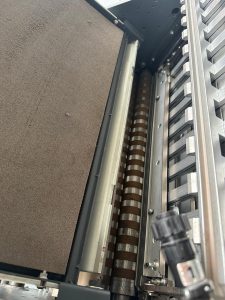
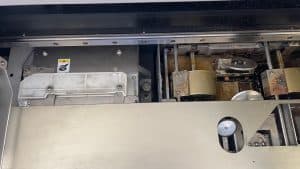
Defekte Sensoren, ungleichmäßig abgenutzte Faltwalzen oder fehlende Dämpfer sind gängige Befunde.
Dies sind normale Gebrauchsspuren und Anzeichen von Abnutzung über die Zeit.
Nichts davon ist ungewöhnlich.
Tatsächlich gehört das zur Arbeit mit Gebrauchtmaschinen.
Warum Inspektion wichtig ist
Jede Maschine muss sorgfältig geprüft werden, bevor sie wieder einsatzbereit ist.
Kleine Probleme können große Auswirkungen auf die Leistung haben.
Ein defekter Sensor kann den Arbeitsablauf unterbrechen, abgenutzte Walzen beeinträchtigen die Falzqualität und fehlende Komponenten erschweren den Betrieb.
Die frühzeitige Identifizierung dieser Punkte stellt sicher, dass die Maschine später zuverlässig laufen kann.
Erfahrung macht den Unterschied
Der Schlüssel liegt nicht darin, Probleme zu finden, sondern zu wissen, wo man suchen muss.
Mit Erfahrung können typische Probleme schnell erkannt und effizient gelöst werden.
Dies reduziert Ausfallzeiten und gewährleistet eine gleichbleibende Leistung.
Maschinen für den nächsten Einsatz vorbereiten
Bevor eine Maschine unsere Werkstatt verlässt, wird sie geprüft und bewertet.
Je nach Kundenwunsch können Maschinen im aktuellen Zustand geliefert oder weiter aufbereitet werden.
Das Ziel ist immer dasselbe:
Eine Maschine, die zur Produktion passt und zuverlässig läuft.
Schlussfolgerung
Gebrauchte Falzmaschinen haben immer eine Geschichte zu erzählen.
Das Verständnis der Geschichte und zu wissen, was zu überprüfen ist, ist entscheidend, um die beste Leistung aus ihnen herauszuholen.
Letztendlich geht es nicht darum, Abnutzung zu vermeiden –
Es geht darum, es richtig zu handhaben.