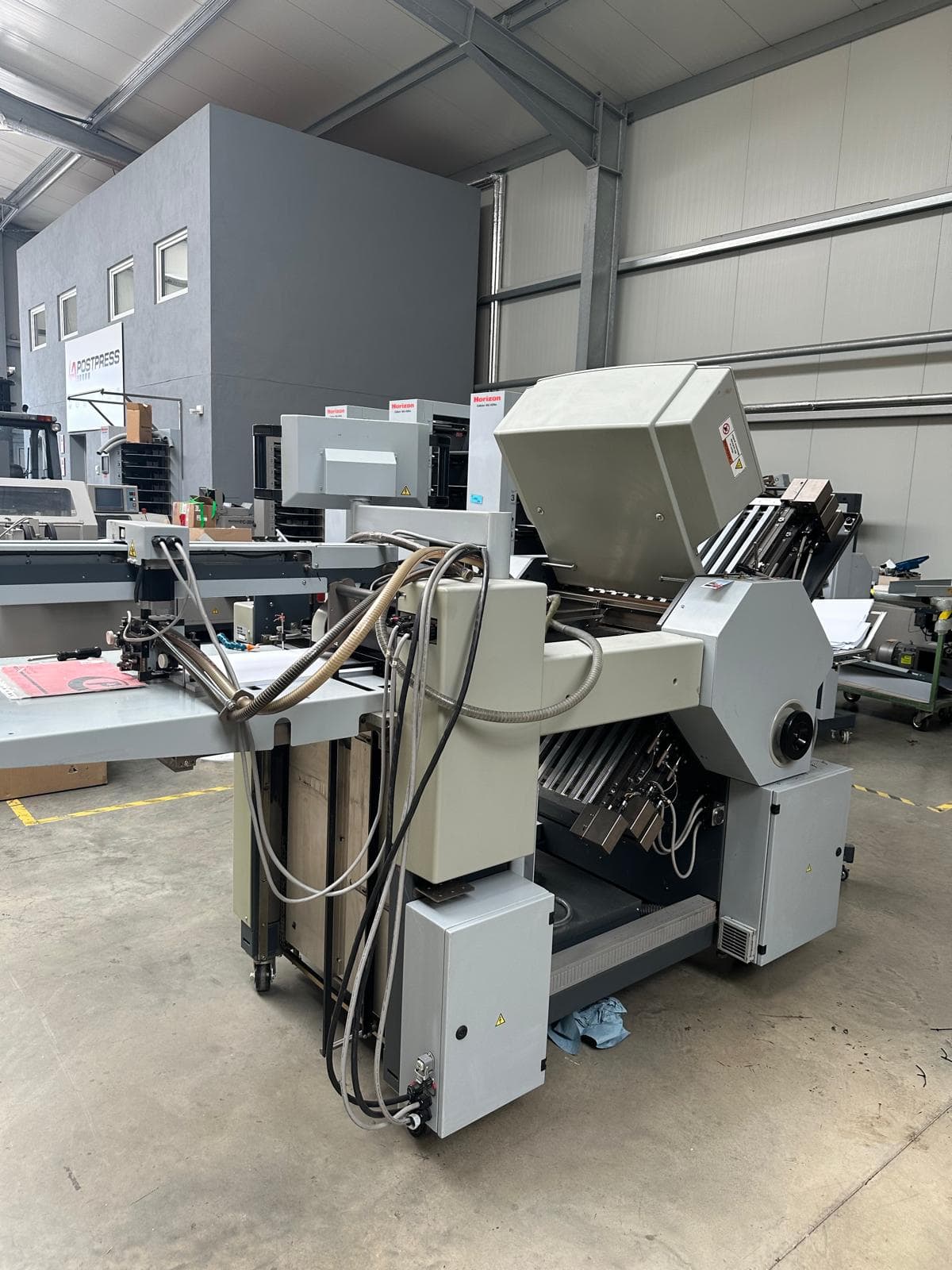
HORIZONfoldingmachine

Used folding machines: what to expect when they arrive

When a used folding machine arrives at our workshop, the real work begins.

At first glance, everything may look fine.
But once the machine is inspected more closely, typical issues often appear.


common issues with used folding machines

In many cases, it’s not one big problem, but several smaller ones.

Faulty sensors, unevenly worn folding rollers, or missing dampers are all common findings.
These are normal signs of wear and usage over time.

None of this is unusual.
In fact, it’s part of working with used machines.


why inspection matters

Every machine needs to be checked carefully before it is ready for production again.

Small issues can have a big impact on performance.
A faulty sensor can interrupt the workflow, worn rollers affect folding quality, and missing components make operation more difficult.

Identifying these points early ensures that the machine can run reliably later.


experience makes the difference

The key is not just finding problems, but knowing where to look.

With experience, typical issues can be identified quickly and solved efficiently.
This reduces downtime and ensures consistent performance.


preparing machines for their next job

Before a machine leaves our workshop, it is checked and evaluated.

Depending on the customer’s needs, machines can be delivered in their current condition or prepared further.

The goal is always the same:
a machine that fits the production and runs reliably.


conclusion

Used folding machines always come with a history.

Understanding that history and knowing what to check is essential to get the best performance out of them.

In the end, it’s not about avoiding wear –
it’s about handling it the right way.
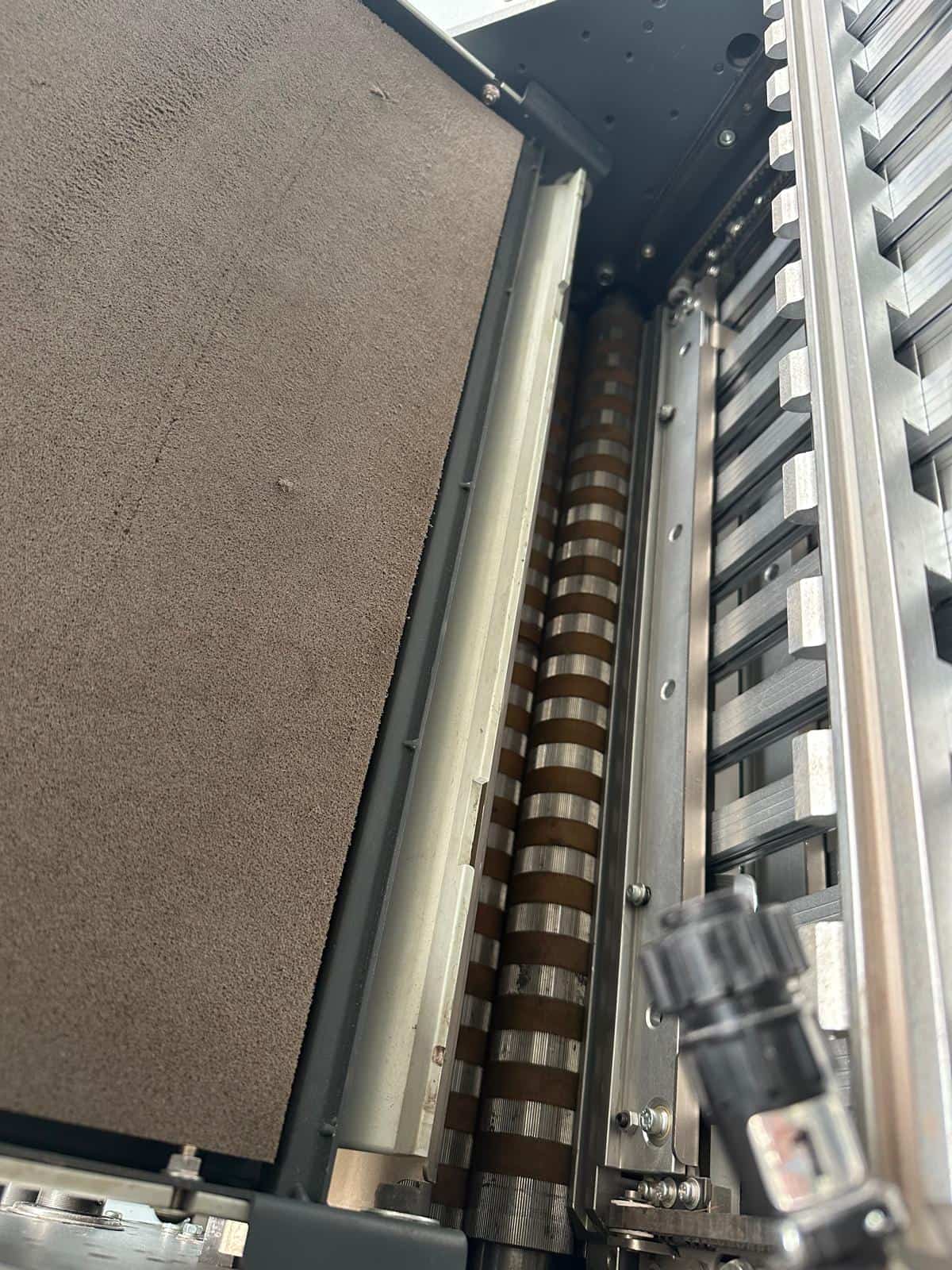
FoldingRollers

Worn folding rollers? How to identify uneven wear

Folding rollers are essential for achieving clean and precise folds.
The challenge is that wear is often not immediately visible.

In practice, a typical pattern appears. If the same format is used over a long period of time, the rollers do not wear evenly. The area where folding happens constantly is used much more, while other areas remain almost untouched.

One clear sign is the difference in material thickness towards the metal core. In heavily used areas, less material remains, which directly affects folding quality. Results become less consistent, and the machine is put under more stress.

Not every sign of wear requires immediate replacement. However, once quality starts to drop and consistent results are no longer possible, the rollers should be replaced.

New folding rollers are an investment, but they ensure that the machine runs smoothly and reliably again.


conclusion

Uneven wear on folding rollers is a common issue, especially when running the same formats continuously. Regular checks and timely action help avoid quality problems and unnecessary machine wear.

Folder

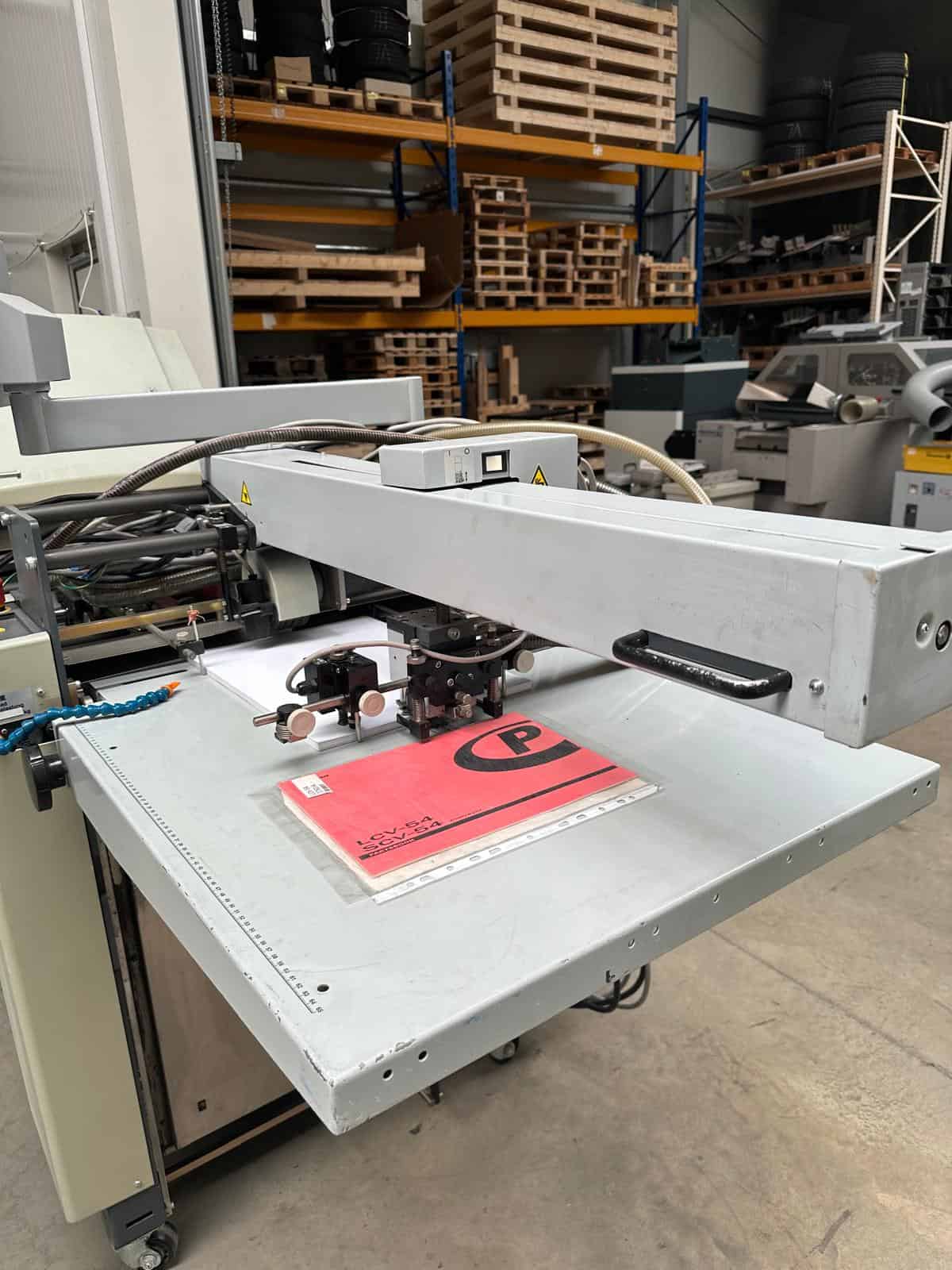
Folding Machine Arm Hard to Move? It Might Be a Missing Damper

In daily production, small mechanical issues can quickly turn into real problems.

A typical example:
The arm of a folding machine becomes difficult to move.

At first glance, this might seem like wear, stiffness, or a general mechanical issue.
But in many cases, the cause is much simpler.

A Common Problem in Folding Machines

In our workshop, we recently had exactly this situation.

The arm of a folding machine could hardly be moved.
Operating it required much more force than usual.

This is not just inconvenient – it also slows down production and can lead to further wear over time.

The Cause: A Missing Damper

With experience, certain problems become very clear.

In this case, the issue was identified immediately:
A missing damper.

Dampers play an important role in many folding machines.
They ensure smooth and controlled movement of mechanical parts, such as arms or units.

If a damper is missing or defective, the movement becomes stiff, uncontrolled, or difficult.

The Solution

The fix was simple but effective.

A new damper was installed, and immediately the difference was noticeable.

The arm could be moved smoothly again, without force or resistance.
The machine was back to normal operation within a short time.

Why This Matters

Issues like this are more common than many operators think.

A missing or defective damper may seem like a small detail, but it has a direct impact on:

  • ease of operation
  • machine wear
  • production efficiency

Ignoring such problems can lead to bigger mechanical issues over time.

The Value of Experience

What made the difference here was not a complex repair –
but knowing where to look.

Recognizing typical issues quickly saves time, reduces downtime, and keeps production running.

Conclusion

If a folding machine becomes difficult to operate,
it’s not always a major defect.

Sometimes, it’s just a small missing component like a damper.

Checking these details can make a big difference in performance and usability.

Practical Tip

If parts of your machine suddenly become hard to move,
always check for missing or worn mechanical components first.

Often, the solution is simpler than expected.

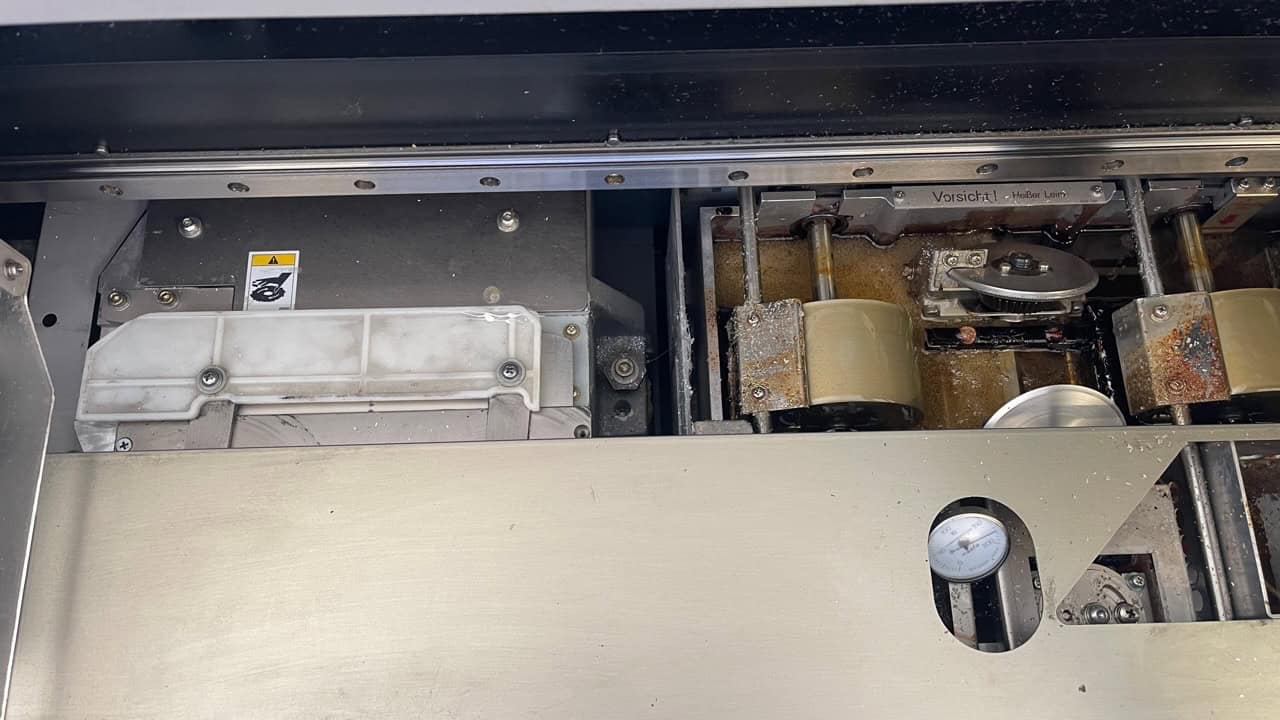
Adhesive glue tank in a perfect binding machine

PUR vs. EVA Glue – Which adhesive is right for PERFECT BINDING?

In perfect binding, the choice of adhesive has a major impact on quality, durability, and production efficiency.
The two most important systems are EVA (hotmelt) and PUR adhesive.

But what are the differences – and which one is the right choice for your production?

What is EVA Glue (Hotmelt)?

EVA is the traditional hotmelt adhesive used in print finishing.
The glue is heated, applied to the spine, and hardens as it cools down.

It is a well-established standard, especially in offset printing.

Key characteristics of EVA:

EVA is easy to handle and cost-effective.
The adhesive remains in the machine and can be continuously refilled.
In most cases, there is no need to dispose of it at the end of the day.

EVA works best with uncoated papers and standard production jobs.

What is PUR Adhesive?

PUR (polyurethane) is a reactive adhesive that cures through a chemical reaction with moisture in the air.

Unlike EVA, it does not simply harden by cooling, but by reacting chemically – which results in a much stronger bond.

Key characteristics of PUR:

PUR offers very high bonding strength and creates durable, flexible bindings.
It is especially suitable for coated, laminated, or glossy papers.

Special Considerations When Using PUR

In daily production, PUR requires a different approach than EVA.

Since PUR reacts with air, it cannot simply remain in the system.
Any remaining adhesive must be disposed of or the system must be properly sealed.

Components that come into contact with PUR are specially coated to prevent adhesion.

As a result, cleaning and maintenance requirements are higher compared to EVA.

The Key Differences

EVA is the simpler solution for everyday use.
It stays in the machine, is easy to refill, and requires minimal maintenance.

PUR, on the other hand, requires more attention.
It reacts with air, cannot be reused, and demands careful handling and cleaning.

However, PUR delivers significantly stronger bonding and performs reliably even with difficult materials.

When Should You Use EVA or PUR?

EVA is ideal for standard production, especially in offset printing and with uncoated papers.
If ease of use and cost-efficiency are priorities, EVA is the right choice.

PUR is the better option for more demanding applications.
It is the preferred solution for coated, laminated, or digitally printed materials where strong and durable binding is essential.

Conclusion: The Adhesive Makes the Difference

Both EVA and PUR have their place in perfect binding.

EVA stands for simplicity, reliability, and efficiency.
PUR delivers maximum performance and bonding strength – even under challenging conditions.

In practice, many binding issues are not caused by the machine itself,
but by choosing or handling the wrong adhesive.

Practical Tip

When working with PUR, proper cleaning and correct handling are essential.
With EVA, consistent temperature and stable processing are the key factors.

Alex's journey with Horizon machines

From Passion to Precision: Alex’s Journey with Horizon Machines

From Passion to Precision: Alex’s Journey with Horizon Machines

https://www.youtube.com/shorts/dVMFZHYxWYY

At LA PostPress, our commitment to excellence is deeply rooted in personal passion and professional expertise. In our latest video, Alex, the founder of LA PostPress, shares his inspiring journey into the world of Horizon machines and how this passion continues to drive our mission today.

A Passion Ignited

Alex’s fascination with Horizon machines began years ago when he recognized their unparalleled quality and reliability. This initial interest quickly evolved into a dedicated pursuit, leading to the establishment of LA PostPress—a company specializing in the sale of pre-owned Horizon postpress equipment.

Building Trust Through Expertise

Over the years, Alex’s hands-on experience and deep understanding of Horizon machines have positioned LA PostPress as a trusted partner for print shops worldwide. Our clients value not only the quality of our machines but also the personalized service and support that reflect Alex’s enduring passion for the industry.

LATEST HORIZON MACHINES

[extenso-landingpage-products miid=”10″ categoryid=”3″ producttypes=”1″ manufacturerid=”65″]Extenso Products[/extenso-landingpage-products]
MORE POSTS
Leave your comment
Share:
Horizon VAC Towers Embark on New Journey to Enhance Print Finishing Operations

Horizon VAC Towers Embark on New Journey to Enhance Print Finishing Operations

Horizon VAC Towers Embark on New Journey to Enhance Print Finishing Operations

https://www.youtube.com/shorts/hcrZMxVkp5U

At LA PostPress, we take pride in equipping print professionals with reliable and efficient finishing solutions. Recently, we prepared six Horizon VAC Towers for delivery to a distinguished print shop, marking another milestone in our commitment to excellence.

Final Preparations

Before departure, our technician, Jörg, conducted comprehensive tests on each VAC Tower to ensure optimal performance. Each unit, along with its corresponding blower, was meticulously labeled to facilitate seamless installation upon arrival.

Personalized Delivery

Understanding the importance of careful handling, our logistics expert, Hubert, personally managed the transportation of the equipment. This hands-on approach guarantees that the machines reach their destination safely and are ready for immediate integration into the client’s workflow.

Commitment to Quality

This delivery underscores our dedication to providing top-quality postpress solutions and personalized service. We are confident that the new owners will experience enhanced productivity and reliability with their Horizon VAC Towers.

LATEST HORIZON MACHINES

[extenso-landingpage-products miid=”10″ categoryid=”3″ producttypes=”1″ manufacturerid=”65″]Extenso Products[/extenso-landingpage-products]
MORE POSTS
Leave your comment
Share:
A container with LA PostPress machines for export to China.

Delivering Excellence: LA PostPress Ships Postpress Equipment to China

Expanding Horizons: LA PostPress’s Commitment to Quality in Global Exports​

https://www.youtube.com/shorts/H9agUV2DhLk

At LA PostPress, we’re proud to announce the export of another full container of postpress machinery to China. This achievement underscores our commitment to delivering high-quality, used postpress machines that meet the stringent requirements of international markets.

Navigating the Complexities of International Shipping

Shipping machinery to China involves more than just logistics; it requires meticulous coordination of communication, customs procedures, inspections, currency exchanges, and adherence to strict technical specifications. Our longstanding partnership with a reliable local colleague in China has been instrumental in streamlining these processes, ensuring that our machines arrive promptly and in excellent condition.

Delivering Only the Best

The Chinese market has a clear preference for newer, high-quality used machines. Older models are often not accepted, emphasizing the importance of providing equipment that meets current technological standards. At LA PostPress, we specialize in offering used Horizon machines in perfect condition worldwide.

Our focus is on supporting the success of print shops and similar businesses by providing suitable machines.

Explore Our Inventory >

Curious about our available machines? Visit our website to browse our current inventory and discover how LA PostPress can support your business needs.

LATEST HORIZON MACHINES

[extenso-landingpage-products miid=”10″ categoryid=”3″ producttypes=”1″ manufacturerid=”65″]Extenso Products[/extenso-landingpage-products]
MORE POSTS
Leave your comment
Share:
Comparison of Horizon BQ-270 and BQ-470 Binding Machines

Comparison of Horizon BQ-270 and BQ-470 binders

Choosing the right binding machine is crucial for the efficiency and quality of book production. Here, we compare the Horizon BQ-270 and BQ-470 binding machines, two models known for their performance and reliability.

Overview of the Models

The Horizon BQ-270 is a compact, fully automatic single-clamp binding machine designed for small to medium runs. It is known for its user-friendliness and reliability, making it ideal for smaller print shops and businesses looking for a cost-effective solution.

The Horizon BQ-470 is a high-performance, four-clamp binding machine that can be configured for either PUR or EVA adhesives. It is designed for larger production volumes and offers advanced automation features that enhance efficiency and flexibility in book production.

Key Features Comparison

The Horizon BQ-270 uses EVA adhesive, so only EVA binding is possible. The model with PUR adhesive is called BQ-280. The machine offers automatic setup with simple touchscreen operation. It can produce up to 500 bindings per hour, bind books up to a maximum size of 320 x 320 mm and a minimum size of 135 x 105 mm, and handle binding thicknesses from 1 to 50 mm. The BQ-270 is especially suitable for small to medium print shops.

The Horizon BQ-470 can be configured with either PUR or EVA adhesive. The machine offers advanced automation features, including setup memory and advanced settings. It can produce up to 1,350 bindings per hour, bind books up to a maximum size of 320 x 320 mm and a minimum size of 145 x 105 mm, and handle binding thicknesses from 1 to 65 mm. The BQ-470 is especially suitable for larger print shops and high-volume producers.

Decision Help

Choose the Horizon BQ-270 if you have small to medium production volumes, need a user-friendly machine that is easy to operate and maintain, and prefer a cost-effective solution.

Choose the Horizon BQ-470 if you need to handle larger production volumes, need a machine with advanced automation and higher production speed, and need a flexible solution for different book thicknesses and sizes.

Conclusion

Both the Horizon BQ-270 and BQ-470 offer excellent performance and quality in book production. The choice between the two models depends on your specific needs and production volume. While the BQ-270 is an excellent choice for smaller operations, the BQ-470 provides the flexibility and capacity needed for larger print shops. No matter which model you choose, with Horizon binding machines, you get reliability, efficiency, and top-quality binding.

Horizon BQ-280 PUR

The BQ-280PUR Perfect Binder: A Game-Changer for the Printing Industry

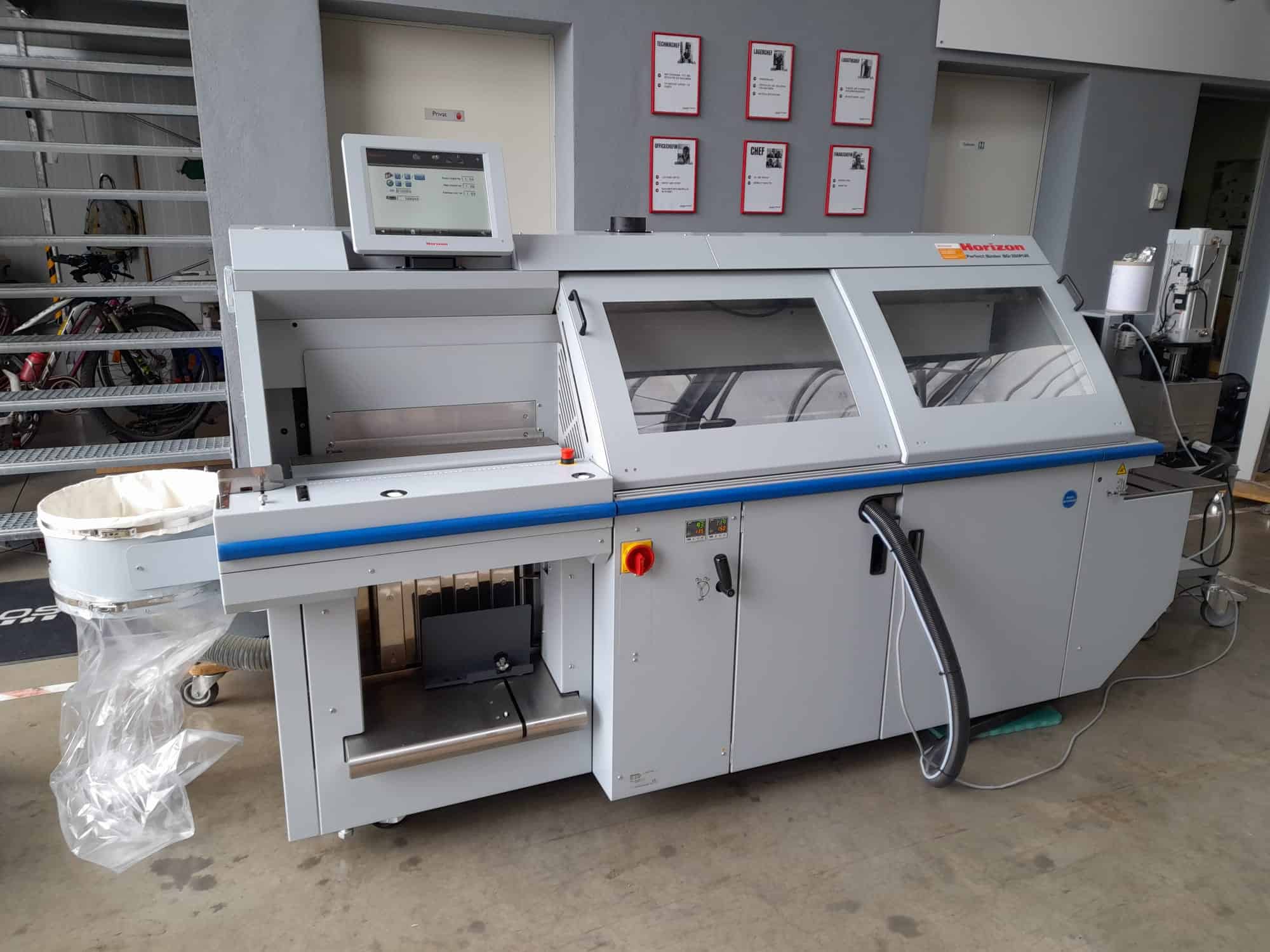
The BQ-280PUR from Horizon introduces precise technology and flexibility to print finishing. With specific features tailored to the needs of modern printing businesses and their clients, this machine sets new standards in the production of bound print products.

PUR Perfect Binding for Maximum Durability

The core functionality of the BQ-280PUR is the use of polyurethane reactive adhesives (PUR), which allow for an exceptionally strong bond. Compared to traditional adhesives, PUR offers improved adhesion to a variety of materials and greater resistance to physical and thermal stresses. This makes the BQ-280PUR ideal for producing books that require a long lifespan and intensive use.

Automated Processes for Increased Efficiency

With its advanced automation technology, the BQ-280PUR significantly enhances efficiency in book production. The machine features an automatic book thickness gauge that automates the adjustment of adhesive application and binding thickness for each book. This reduces setup time for new projects and minimizes human error, leading to consistently high product quality.

Adaptability to Various Formats and Customer Demands

The BQ-280PUR is distinguished by its adaptability. The machine can handle a wide range of book formats and thicknesses, making it a versatile tool for printers. Moreover, the precise control of adhesive application and binding settings allows for high adaptability to specific customer requirements, from different paper types to unique book formats.

Environmental Awareness Through Innovative Technology

The use of PUR adhesives not only contributes to the durability of the products but also supports more environmentally friendly production processes. PUR adhesives are solvent-free and release fewer volatile organic compounds (VOCs) during processing. The BQ-280PUR thus promotes more sustainable production in printing businesses by reducing environmental impact while delivering products of the highest quality.

A Key Factor for Success in the Printing Industry

By integrating the BQ-280PUR into their production line, printing businesses can not only enhance their efficiency and product quality but also expand their offerings of customized solutions and improve their environmental footprint. This machine helps printers meet the constantly changing demands of the market and is a reliable component in everyday operations.

HorizonBQ-440

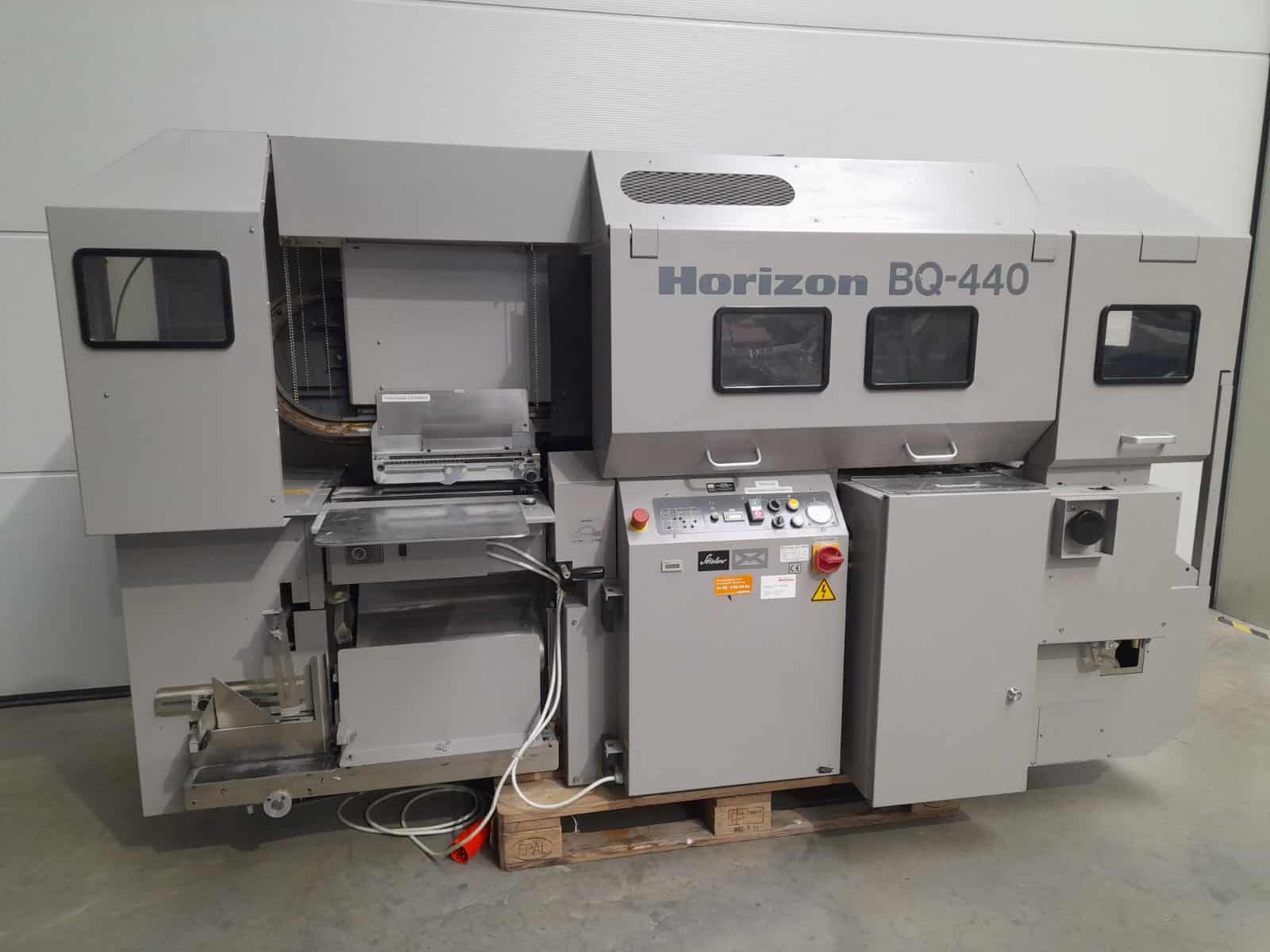
Horizon BQ-440: Solutions for glue application

The Horizon BQ-440 perfect binder is a more cost-effective option compared to its big brother, the Horizon BQ-470. This device offers a good solution for small to medium print runs, but even the best machines can face technical challenges. An occasional issue that users of the BQ-440 experience is uneven glue application—a key element for high-quality bookbinding.

Uneven glue application can lead to a range of problems, including loose pages or a weak binding, which affects the overall quality of the books. Fortunately, this issue can be resolved through some simple steps. The key lies in the correct adjustment and maintenance of the glue rollers. Regular checking and adjusting of the rollers ensure that the glue is evenly applied to the spine of the book. This guarantees a strong and lasting binding.

Another important component is the regular cleaning and maintenance of the device. Glue residue and deposits can affect the function of the rollers and lead to uneven application. Cleaning the glue rollers and the glue area helps to maintain the optimal functioning of the BQ-440. Additionally, checking the glue quality on different types of paper and thicknesses can be helpful, as adjustments may be needed to achieve consistent results.

Besides technical maintenance, it is also important to understand the operation and settings of the machine. The Horizon BQ-440 offers user-friendly interfaces and adjustment options, allowing for precise customization to the specific requirements of your bookbinding project. Regular practice with the machine can help to improve the understanding and skills of the operators.

In summary, the Horizon BQ-440 provides a good solution for professional bookbindings. With proper care, regular maintenance, and knowledgeable operation, your BQ-440 remains an indispensable tool in your print shop, ensuring high-quality, durable bookbindings.

Here you can find an overview of our current perfect binders.